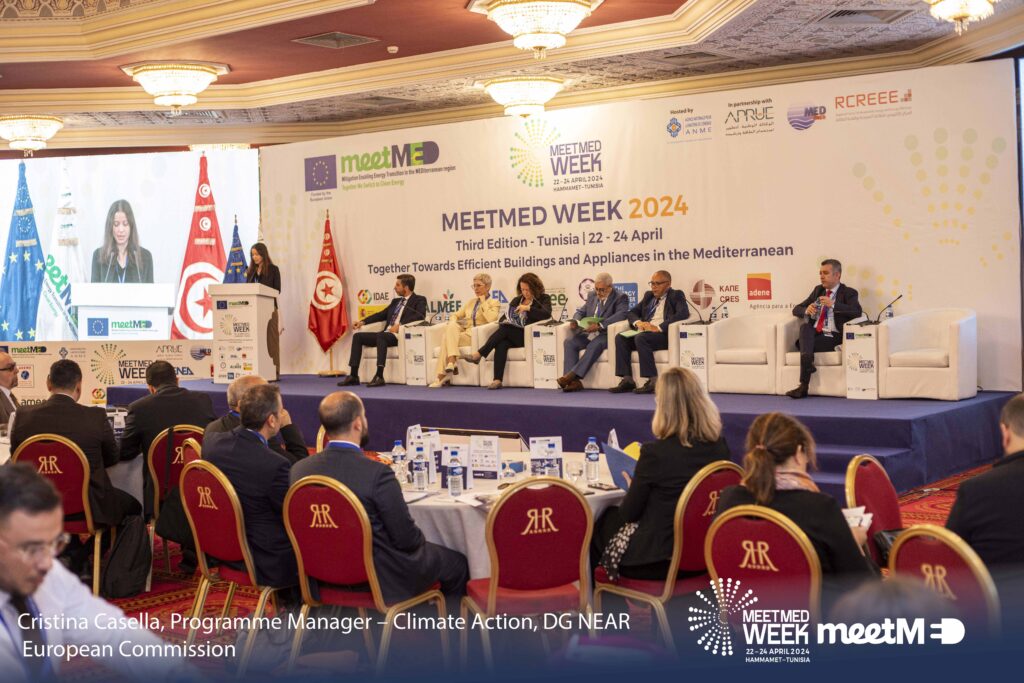
Hammamet – Within the activities of the meetMED II project (Mitigation Enabling Energy Transition in the Mediterranean Region), funded by the European Union, the third edition of the meetMED Weeks took place in Hammamet, Tunisia between 22 – 24 April. The three-day event brought together more than 250 energy experts representing officials, policymakers, stakeholders, municipalities, and private sector from the Mediterranean region with the aim of promoting the energy and climate transition.

 The third edition of the meetMED Weeks, funded by the European Union, was organised by the Tunisian National Agency for Energy Control (ANME), in partnership with the Algerian National Agency for the Promotion and Rationalisation of Energy Use (APRUE). The event provided a platform for exchange of experiences and to explore avenues of cooperation between the Southern Neighbourhood countries in the field of energy efficiency, with a particular focus on the buildings and appliances sector.

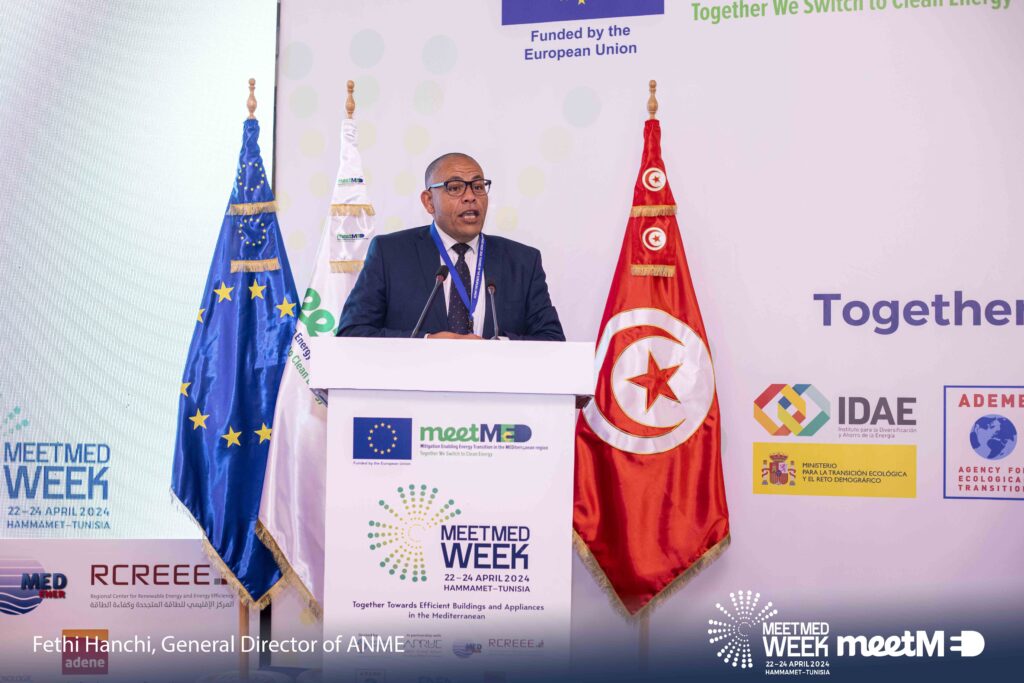
During the opening plenary, Fethi Hanchi, General Director of ANME stressed the importance of national and international cooperation to achieve greenhouse gas emission reduction targets and to minimise the impacts of energy price fluctuations on the Tunisian economy. He also described the agency’s efforts to prepare a platform for assessing the carbon footprint of industrial products, scheduled to be operational by the end of the year. 

Likewise, Merouane Chabane, General Director of APRUE underlined the strong commitment of Algeria, with its regional partners, for the promotion of energy efficiency, and for the development of decarbonisation policies within the context of sustainable development.

Cristina Casella, Programme Manager – Climate Action, DG NEAR, European Commission, recognized the importance of the meetMED Week, as a flagship event in the South Mediterranean to discuss how best to advance the energy transition in the region. Casella also recalled that the energy transition is at the top of the EU agenda driven by EU’s climate objectives with the European Green deals ambition to achieve a 55% reduction of greenhouse gas emissions by 2030 and achieve net zero by 2050.

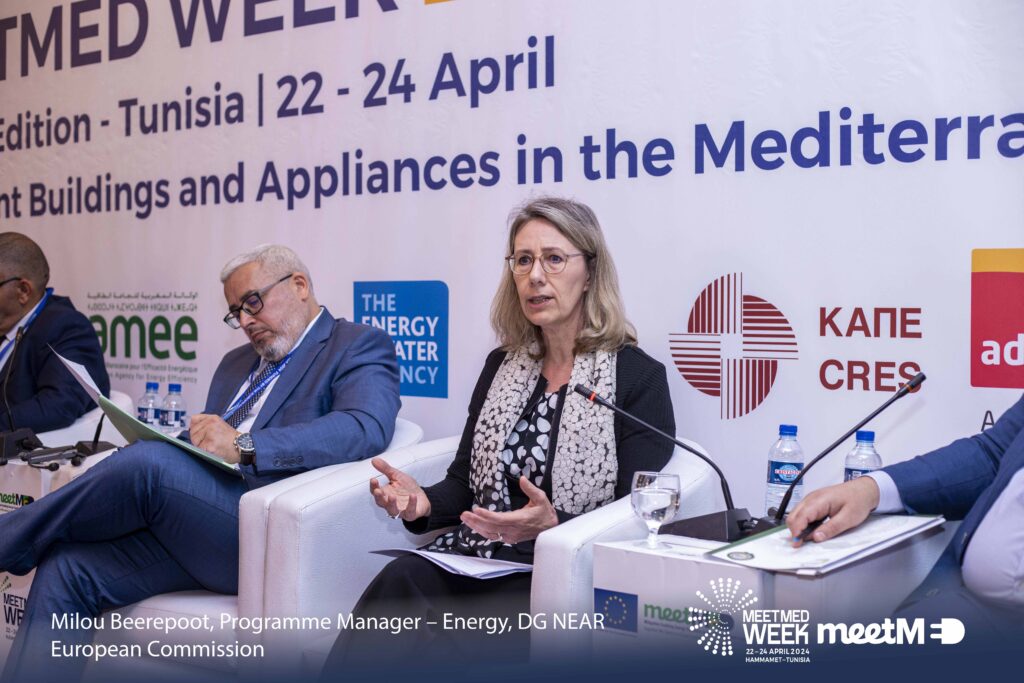
From her side, Milou Beerepoot, Programme Manager – Energy,  DG NEAR, EU Commission, highlighted the European Union support to just energy transition policies in the southern Mediterranean and how different types of instruments, varying from technical assistance to financial support, can foster a just energy transition.  She illustrated this with a few examples of EU supported regional projects that offer contributions to a fair and equitable energy transition.

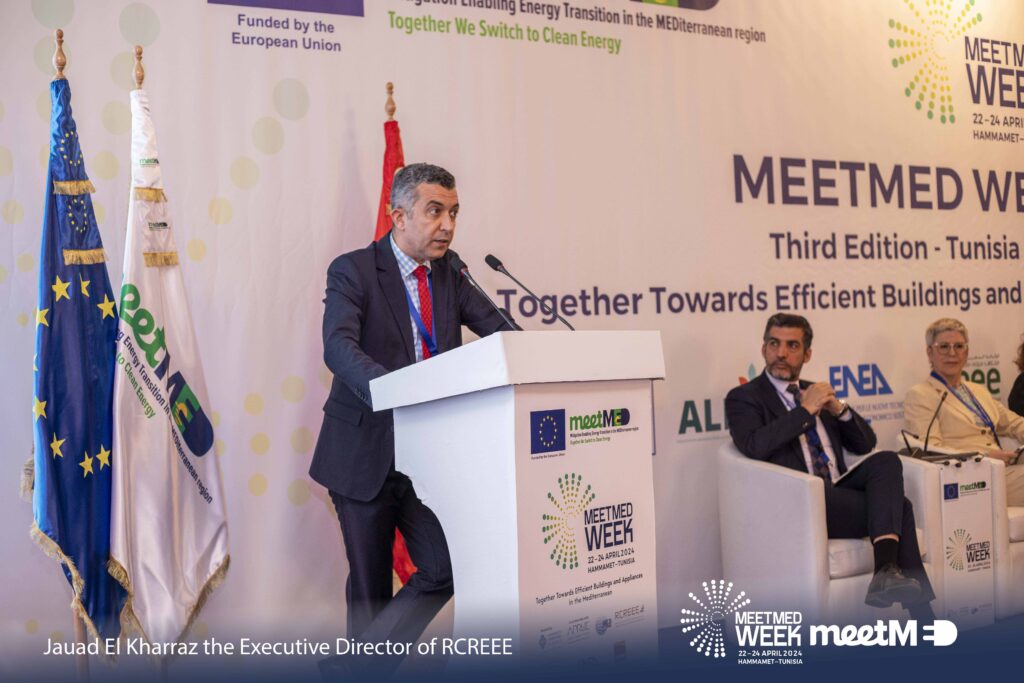
Jauad El Kharraz the Executive Director of the Regional Center for Renewable Energy and Energy Efficiency (RCREEE) pointed out that the support of the European Commission has been fundamental to mainstream energy efficiency efforts in the Mediterranean. “We definitely need more support in the next period to continue consolidating our member states and the national agencies in their energy transition journey” El Kharraz added.

Roberta Boniotti, the Secretary General of the Mediterranean Association of National Energy Management Agencies (MEDENER), further added “we are currently focusing on supporting the member countries in their efforts to achieve energy efficiency and renewable energy. In the second phase of the project, our focus was on the building sector, which plays a significant role in energy efficiency since it is one of the most energy-consuming sectors”.

Throughout 16 sessions, the conference offered participants multiple opportunities for active engagement, with high-level sessions and technical parallel sessions to reflect on implementing Energy Efficiency and Renewable Energy measures, focusing on Buildings and Appliances, and demonstrating successful pilot projects led by partners.

Discussion topics included how collaborative work can enhance energy transition in the Mediterranean region, stimulating dialogue towards net zero emissions in the building sector, and presenting innovative financing mechanisms to foster investments in sustainable energy. One session also explored synergies between the meetMED and the PeebMED projects, both EU-funded programs.

The event was concluded by a workshop training session on energy transitions for journalists followed by two site visits at Municipality of Nabeul and Sky Energy Company.

For more information and media inquiries, please contact:
Ms. Asmaa Ahmed – meetMED Communication Manager
Email: asmaa.ahmed@rcreee.org

Background:

meetMED is an EU-funded project (ref: GRANT CONTRACT ENI/2020/420-413) that aims to contribute to enhancing the energy security of beneficiary South Mediterranean Countries (SMECs)1, while fostering their transition to low carbon economy, thereby contributing to more stable, efficient, competitive, and climate-resilient socioeconomic contexts. Launched in 2021, meetMED second phase activities aim at strengthening the implementation of Energy Efficiency (EE) measures and improving countries’ energy mix focusing on building and appliances’ sectors through a multiscale, multi-partner and inclusive approach at local and regional levels, thereby fostering regional cooperation.

The second phase of the project is implemented by the Mediterranean Association of the National Agencies for Energy Management (MEDENER) and the Regional Centre for Renewable Energy and Energy Efficiency (RCREEE).

Within the current energy context in the region, one of the priorities of the South Mediterranean countries (SMECs) is to secure energy provision and to promote energy saving and EE applications. High risk linked to new technologies, lack of regulatory framework, cumbersome administrative procedures, absence of national standards and incentives and clear financing instruments can be challenging for EE projects implementation basically in the financing phase.

Although financing institutions (including international and commercial banks) are keen on financing energy efficiency, and relevant instruments are indeed available, project developers still encounter obstacles in accessing finance. Constraints and barriers could come indicatively from the diversity of sources of funding, the lack of visibility on conditions, processes, financing modalities, the sizing of projects, the loan inadequacy and financing instruments (inappropriate grants) regarding the type of projects (maturity of loans, liquidity, and cash flow measurement, etc.). Constraints are both on the offer side and demand side.

Hence, there is an essential need to set up guidelines and/or an online platform providing comprehensive and clear tools and guidance to assist in the development of bankable energy efficiency projects in general and more particularly for building and appliances.

Objective of the Assignment:

The objective of this assignment is to engage a proficient Web Developer to implement an Interactive and User-Friendly web-tools and guidelines on the platform dedicated to project developers /owners. This platform will serve as a comprehensive online tool designed to assist users in identifying and accessing financing options for energy efficiency projects in South Mediterranean Countries (SMECs). The Web Developer will be responsible for creating a seamless digital experience that aligns with the meetMED brand identity and communication guidelines, ensuring the platform is both informative and engaging for its target audience.

The content of the Finance Navigator is detailed in the “Report on the content of the web-tool and funding guide” document, which will be provided to the Web Developer at the initiation of the project works. Additionally, a preliminary layout design of the platform is included in the Annex IV of this RFP to provide clarity regarding the scope of work. Kindly be advised that the finalized version of the layout design document will be furnished at the initiation of the project works, subsequent to the awarding of this contract.

Relevant Documents:

Submission Deadline:

  • Date: 27/04/2024 1:00 PM EGYPT Time Zone
  • Time: 1.00pm (Local Time)

Background

meetMED is an EU-funded project aims to contribute to enhancing the energy security of beneficiary countries (namely Algeria, Egypt, Jordan, Lebanon, Libya, Morocco, Palestine, and Tunisia) while fostering their transition to low carbon economy, thereby contributing to more stable, efficient, competitive and climate-resilient socioeconomic contexts. Launched in 2021, meetMED second phase activities aim at strengthening the implementation of EE measures and improving countries’ energy mix focusing on building and appliances’ sectors through a multiscale, multi-partner and inclusive approach at local and regional levels, thereby fostering regional cooperation.
The second phase of the project is implemented by the Mediterranean Association of the National Agencies for Energy Management (MEDENER) in partnership with the Regional Centre for Renewable Energy and Energy Efficiency (RCREEE).

Overview:

Within the current energy context in the region, one of the priorities of the South Mediterranean countries (SMECs) is to secure energy provision and to promote energy saving and EE applications. High risk linked to new technologies, lack of regulatory framework, cumbersome administrative procedures, absence of national standards and incentives and clear financing instruments can be challenging for EE projects implementation basically in the financing phase.

There are difficulties for project developers to access finance unless relevant instruments exist (transition funds, incentives) and financing institutions (international and commercial banks) are keen on financing energy efficiency.

Constraints and barriers could come indicatively from the diversity of sources of funding, the lack of visibility on conditions, processes, financing modalities, the sizing of projects, the loan inadequacy and financing instruments (inappropriate grants) regarding the type of projects (maturity of loans, liquidity, and cash flow measurement, etc.). Constraints are both on the offer side and demand side.

Hence, there is an essential need to set up guidelines and/or an online platform providing comprehensive and clear tools and guidance to assist in the development of bankable energy efficiency projects in general and more particularly for building and appliances.

This RFP will be under the framework of meetMED activity 5.2.1 Develop Interactive Tool and Guidelines on a Dedicated Platform for the South Mediterranean Countries.

Objective of the Assignment:

This assignment aims to:

  • Prepare the contents and structures of the Interactive Tool and Guidelines to be published on the dedicated Platform, based on the review of the currently existing meetMED funding guide on financing capabilities with specific focus on efficient buildings and appliances in the SMECs, and complete any missing data/information to ensure high quality contents of the Interactive Tool and Guidelines.
  • Provide comprehensive technical assistance on developing a webtool for the project users / owners in the SMECs to get information and assist them in designing their projects in terms of financing energy efficiency in buildings and in appliances.
  • Develop the layout design of a platform that will be online and consisting of two components, 1) Webtool and 2) Interactive funding guide.
  • Prepare the Terms of Reference (ToR) for consulting firm specializing in web development to create the platform and follow up the implementation processes.

Submission Deadline:

  • Date: 14.09.2023 1:00 PM EGYPT Time Zone
  • Time: 1.00pm (Local Time)

Special Instruction:

  • Proposer must mention the project ref (GRANT CONTRACT ENI/2020/420-413) in the proposal and invoice.

Initiated by The French Agency for ecological transition (ADEME), with the support of its international partners, the special “building and construction” edition of the Medadapt Awards rewarded three projects for their exemplary and reproducible practices, on 9 May, during the meetMED Week 2023, in Marrakech. The winners are the Jordan Renewable Energy and Energy Efficiency Fund (JREEEF), the Palestine Green Building Council (PALGBC) and the company Agua de Sol.

Renewable energy and energy efficiency for public schools in vulnerable communities in Jordan
Jordan Renewable Energy and Energy Efficiency Fund (JREEEF)

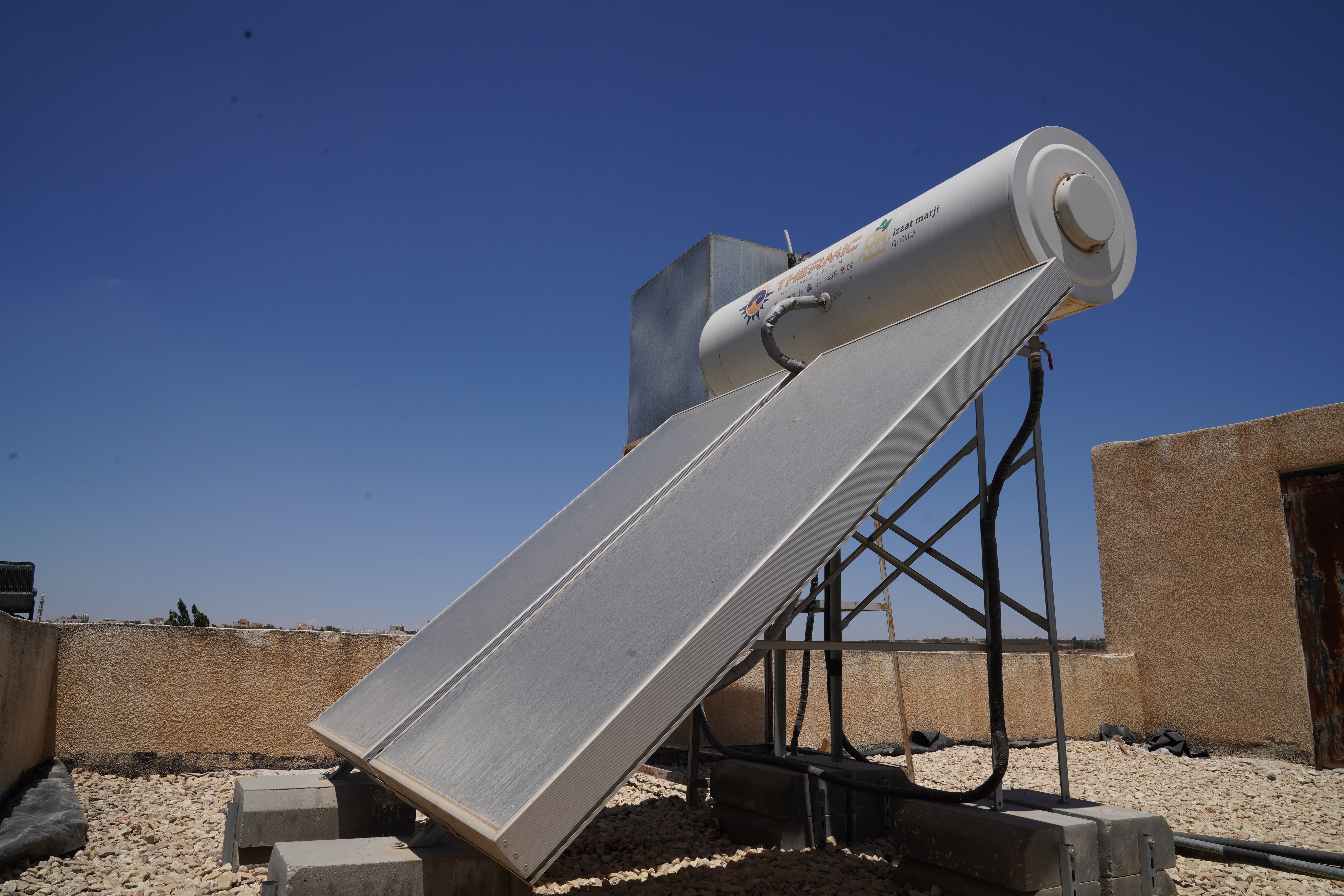
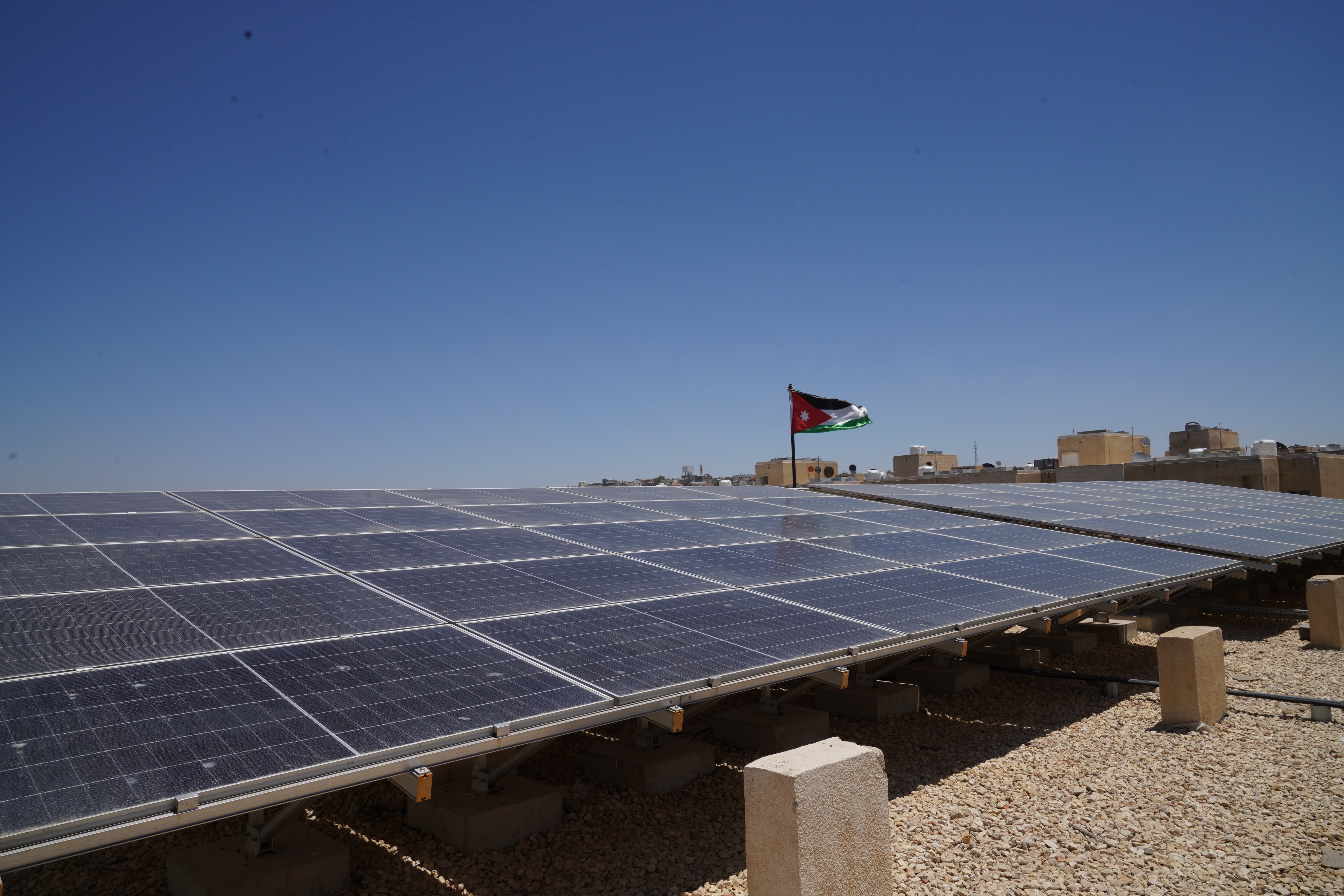
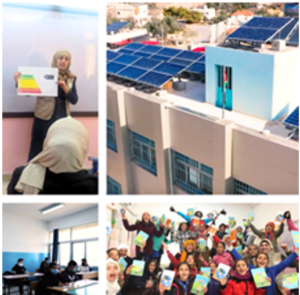
PROJECT: JREEEF’s objective was to improve the teaching conditions in public schools in territories hosting vulnerable communities in Jordan. To this end, after an audit phase, JREEEF implemented a program to improve the energy efficiency of buildings and to integrate solar equipment (installation of photovoltaic systems and solar water heaters). This project was followed by a large-scale campaign to raise awareness of the problems of energy poverty and the thermal renovation of buildings among students, teachers and those involved in the building industry. Inspiring for future generations!

RESULTS: 67,950 beneficiaries were reached with cumulative savings on energy bills of 500,000 (JOD/year) and a decrease in CO2 emissions of 2,101 (T/year).

Building retrofitting and improving energy efficiency
for Palestinian refugees in Qaddoura camp
Palestine Green Building Council (PALGBC)

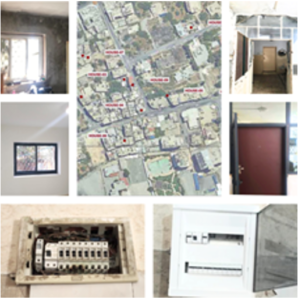
PROJECT: PALGBC’s objective was to improve the living conditions of the refugees in Qaddoura camp by renovating the buildings to improve the thermal comfort and energy efficiency of the buildings. After an audit phase and the training of local contractors in energy efficiency and building renovation, PALGBC carried out renovation and insulation work on doors, windows, walls and roofs, and implemented energy efficiency measures such as replacing lighting, electrical appliances and installing solar water heaters.

The project included taking a survey of residents before and after the housing improvements were carried out.

RESULTS: 14 houses have conducted retrofits with an average reduction in energy consumption of over 30%.

Production of drinking water: Sun Air Fountain® solution
Agua de Sol

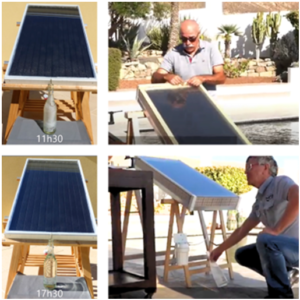
PROJECT: The company Aqua de Sol has developed the SunAir Fountain®, an effective solution for the production of drinking water from moist air, using solar thermal energy. This drinking water production solution reduces the pressure on ecosystems by avoiding the exploitation of rivers, lakes and underground aquifers, limits the costs of water treatment and allows the supply of drinking water in an off-grid context.

RESULTS: The SunAir Fountain® solution allows the production of 1.2 l/day, per panel of 0.7 square meters while reducing the consumption of fossil fuels (no plastic bottles, pumping, filtration, etc.).

This edition of the Mediterranean Climate Change Adaptation Awards is an opportunity to raise awareness of the urgent need to take action and the importance of sharing experiences to inspire and mobilise Mediterranean stakeholders!

MORE INFORMATION

PRESS CONTACT
Elodie LOCH-BÉATRIX — Langevin & Associés
+33 7 66 07 00 47
presse@medadapt-awards.com

SOCIAL MEDIAS
TwitterLinkedIn 

WEBSITE

The second edition of meetMED Week 2023, that took place in Marrakech, Morocco from 09 to 11 May, witnessed the announcement of the fourteen Mediterranean cities selected for the twining agreements. The thee-day conference, is the meetMED largest annual event, funded by the European Union, aimed at fostering the regional cooperation for the energy and climate transition in the Mediterranean countries.

The announcement came during one of the meetMED Week sessions devoted to the role of local authorities in the energy transition, bringing together representatives of Mediterranean cities – Lisbon (Portugal), Sahab (Jordan), and Tata (Morocco) – and the SEACAP4SDG and CLIMAMED projects.

During the session, Portuguese Energy Agency  (ADENE) presented the 14 selected cities and the 6 partnerships identified, namely those that join Lisbon in Portugal with Al-Karak and Sahab in Jordan, Palmela in Portugal and Tata in Morocco, San Lucido in Italy and Moukhtara in Lebanon, Gozo in Malta and El Kef Lahmar in Algeria, Grevena in Greece to Abasan Al-Kabira in Palestine, as well as Grenoble in France with Sfax and Bizerte, both in Tunisia. A Spanish town and Cairo are still expected to join these partnerships.

Following the selection processes, the next steps will include signing Memorandums of Understanding with the cities, after which the Action Plans for each partnership will be prepared. These plans will address energy self-consumption, urban rehabilitation and renovation of buildings, the water-energy nexus, passive climate change mitigation measures, as well as actions to raise awareness and boost public participation.

Notably, the call for applications for meetMED twinning agreements was launched in January under project’s activity dedicated to promoting cooperation between cities in the north and south of the Mediterranean Basin region. Under the Portuguese Energy Agency (ADENE) leadership, the twinning agreements intend to promote dialogue, exchanging knowledge and experiences, and regional cooperation on energy efficiency in buildings.


For more information, please contact:

Mrs. Inês Mendes

meetMED II activity leader

Manager Email: ines.mendes@adene.pt

Marrakech – Within the activities of the meetMED II project (Mitigation Enabling Energy Transition in the Mediterranean Region), funded by the European Union, the second edition of meetMED Weeks 2023 took place in Marrakech between 9 – 11 May. The three-day event brought together more than 250 energy experts representing officials, stakeholders, and policymakers from the Mediterranean region with the aim of promoting energy and climate transition.

Speaking at the opening ceremony, Morocco’s Minister of Energy Transition and Sustainable Development Leila Benali said that the event is an opportunity for the world to reiterate its commitment to sustainability goals as humanity faces successive energy and climate challenges.

Said Moulin, Director General of the Moroccan Agency for Energy Efficiency (AMEE), echoed Benali’s remarks, highlighting Morocco’s potential in the renewable energy sector. He also recalled King Mohammed VI’s directives to prioritize energy sufficiency.

President of the Mediterranean Association of National Agencies for Energy Management (MEDENER), Griorgio Graditi, who joined the event via video conference, stressed his association’s efforts to implement renewable resources and energy efficiency policies and programs, as well as coordinate with various institutions to reach energy and climate transition goals.

Despite these efforts, “the region’s energy potential is largely under-exploited,” said Graditi, calling on stakeholders and policymakers to implement “concrete measures and goals” to fostering decarbonization. He also encouraged the sharing of experience, know-how, and skills between countries of the Mediterranean region.

Likewise, Jauad El Kharraz, Executive Director of the Regional Center for Renewable Energy and Energy Efficiency (RCREEE), called for more cooperation between all concerned parties to reach the region’s energy sufficiency potential.
“We are proud of what has been achieved but we hope Morocco will do more to meet its goals, including increasing renewable energy [generation] and reducing electricity consumption,” he said.

While the world is currently witnessing a “challenging geopolitical and climate context,” the Mediterranean region has a “big opportunity to become a regional hub for hydrogen economy,” according to El Kharraz.
Throughout the second day of the conference, representatives of regional organizations, national agencies, financial institutions, experts, researchers, and private sector actors called on MED SEI Forum, to promote green finance as a key imperative for a successful energy transition in the Mediterranean region.

Welcoming the growing interest of banks and financial institutions in energy transition projects, Cristina Casella, Programme Manager – Climate Action, DG NEAR, European Commission, said “The purpose of this roundtable is to enhance the discussion between public authorities, the financial sector, and other stakeholders to promote the exchange of experience and best practices in order to facilitate access to green finance, which is essential for a successful green energy transformation.”

Maged Mahmoud, Technical Director of the Regional Center for Renewable Energies and Energy Efficiency (RCREEE), indicated that this forum has created synergies between public and private actors to develop green investment that provides several benefits to companies, including lower energy and production costs, reducing the carbon footprint and access to international markets in light of environmental requirements.

From her side, the Secretary General of the Mediterranean Association of National Agencies for Energy Management (MEDENER), Roberta Boniotti, stressed the importance of the contribution of the private sector in the financing of energy transition projects, due to the lack of public money to finance energy efficiency interventions and green investments.

The event featured a variety of sessions and conferences, during which speakers representing different countries and institutions shared their insight into the region’s climate and energy-related issues, as well as recommended action plans.

After the conference, participants were invited by the Research Institute for Solar Energy and New Energies (IRESEN) of Morocco to a site visit to Ben Guerir Green Energy Park, a unique platform for experimentation, research, and training on renewable energy technologies, batteries, electrolysis, eco-buildings and eVehicles charging technologies.

MeetMED Project

The MEETMED project (Mitigation Enabling Energy Transition in the Mediterranean region), funded by the European Union aims to promote energy and climate transition in Southern Eastern Mediterranean countries. Implemented by MEDENER and RCREEE, the project is “dedicated to fostering regional cooperation for energy and climate transition” in the region, according to the organizers.

For more information and media inquiries, please contact:
Ms. Asmaa Ahmed – meetMED Communication Manager
Email: asmaa.ahmed@rcreee.org

Amman – 17 March 2023

The meetMED project, funded by the European Union, and supported by the Mediterranean Association of National Agencies for Energy Management (MEDENER) & the Regional Center for Renewable Energy and Energy Efficiency (RCREEE), in close cooperation with the Royal Scientific Society organized a four-day national consultation mission on appliances scrapping from 14 – 17 March 2023 in Jordan.

The mission’s objective was to obtain more information about the Jordanian scrapping and recycling industry and identify the potential of collecting, recycling, and marketing the materials from scrapped appliances, in addition, to focusing on the types of appliances collected and the existing programs that may support such market.

During the consultation mission, meetMED experts met representatives from the Ministry of Environment (MoE)Jordan Renewable Energy and Energy Efficiency Fund (JREEEF)UNDP Jordan, Royal Scientific SocietyFriedrich-Ebert-Stiftung (FES) and E-Tafkek company.

The first day was centered around making acquaintance with the existing policies and regulations for appliances scrapping in Jordan, learning about types and amounts of appliances covered under these policies, and social and environmental guidelines for health and safety. In a lively panel discussion, participants were able to put all their questions to Jordanian officials from the MoE about future national plans for WEEE sector management. Hereafter, the delegation visited Jordan Renewable Energy and Energy Efficiency Fund (JREEEF) premises, where they learned about the existing market for appliances scrapping and recycling, facilities dealing with appliances, and the main barriers and challenges facing this sector.

On the second day, the delegation was received by the UNDP Jordan office and had the opportunity to foster the potential cooperation between RCREEE,RSS, and UNDP for the enforcement of existing policies and possible awareness campaigns and had the chance to look back on the challenges facing the development partners and the investors in Jordan. The day was closed with a fruitful meeting at the Royal Scientific Society to understand the main types of recycled materials and the opportunity to export in addition to the alignment of efforts in the cross-cutting projects.

On the third and final day, the meetMED delegation visited Friedrich-Ebert-Stiftung (FES) premises in Jordan and went on a field visit to E-Tafkek company. These field visits revealed that important steps are being made in the private sector to recycle. 

This consultation mission shows that Jordan aspires to creative environmental solutions in all sectors, in particular in the field of household appliances.

For more information, please contact:
Ms. Asmaa AHMED
meetMED II Communication Manager
Email: asmaa.ahmed@rcreee.org

A special edition of the Medadapt Awards has just been launched, on the theme of adaptation of the buildings and the construction sector. Candidates have until April 9, 2023 to submit their applications. The award ceremony will take place on May 11, 2023, during the MeetMED Week in Marrakech.

A competition to encourage territories to adapt to climate change!

The Mediterranean Climate Change Adaptation Awards identify and mobilise the key players involved in implementing projects to adapt to climate change from coastal, urban and rural territories across the Mediterranean.

The French Agency for ecological transition (ADEME) is the initiator of this new edition, in partnership with Plan Bleu, the UN Environment Programme (UNEP) Global Alliance for Buildings and Construction (GlobalABC) and its working group “Adaptation”, the meetMED project supported by MEDENER and RCREEE, and Resallience.

This special edition will specifically highlight adaptation solutions in the building sector. It will allow to mobilise the actors of adaptation to climate change from all the countries of the Mediterranean basin and to promote their projects. It will also illustrate how Mediterranean stakeholders answer to the Call to action proposed by the GlobalABC.

It will reward actions relating to buildings, equipment, infrastructure and facilities, linked to the building sector, designed or renovated in a resilient manner. This could include, for example, bioclimatic developments (shaded structures, ventilation, etc.), management of rainwater or drinking water resources, thermal comfort in buildings in summer, or actions aimed at reinforcing the robustness of networks and infrastructures to climatic events.

The aim of these awards is to encourage other territories to adapt to climate change by drawing inspiration from the winning projects. Previous editions have identified and highlighted over 100 projects from 18 countries around the Mediterranean.

Adapting to climate change: a priority for the Mediterranean region

The Mediterranean basin, with its 500 million inhabitants, is the second-most impacted area by climate change after the Arctic, as shown in the recent MedECC (Mediterranean Experts on Climate and Environmental Change) report.

Temperatures in this climate change hotspot are increasing faster than the global average, and major impacts are expected as soon as 2050. These include up to a 10% drop in the availability of freshwater as well as an increase in the intensity and frequency of extreme weather events such as heatwaves, droughts, and floods. Further major impacts are also predicted in the long term. By 2100, it is predicted there will be a temperature increase of 5.6 °C, a 20% drop in rainfall and a potential 90cm rise in sea levels.

Cities and rural communities across the Mediterranean must therefore work to create stable social, economic and environmental conditions so that the region is better able to deal with the impact of extreme weather and events linked to climate change.

This special edition of the Mediterranean Climate Change Adaptation Awards is an opportunity to raise awareness of the urgent need to take action, for he building sector, and the importance of working together to create inspiring and innovative solutions that can be used throughout the region.

Key competition dates

Competition start date: March 2023
Competition end date: 9 April 2023
Award Ceremony: 11 May 2023, during the Second Edition of the meetMED Weeks held in Marrakech (Morocco).

APPLICATIONS CLOSING DATE: 9 April 2023

FIND OUT MORE

PRESS CONTACT

Elodie LOCH-BÉATRIX — Langevin & Associés
presse@medadapt-awards.com / +33 7 66 07 00 47

WEBSITE / SOCIAL NETWORKS

Website — TwitterLinkedIn

15th November 2022 – Sharm El-Sheikh

 The meetMED project (Mitigation Enabling Energy Transition in the Mediterranean region), an EU-funded project, developed by the Mediterranean Association of the National Agencies for Energy Management (MEDENER) and the Regional Centre for Renewable Energy and Energy Efficiency (RCREEE) was fortunate to co-organize and participate in seven side-event sessions at the 27th edition of the United Nations Climate Change Conference (COP27) hosted in the green city of Sharm El-Sheikh this year. 

COP27 is the world’s most important conference about climate change, bringing together partners from the public and private sectors, civil society, and academia to accelerate action toward the goals of the Paris Agreement and to strengthen climate action.

Kicking off meetMED’s presence on November 7, 2022, where the Mediterranean pavilion hosted a high-level dialogue on Boosting Energy Efficient Buildings in the Mediterranean Region, Cristina Casella, Programme Manager – Climate Action, DG NEAR, European Commission said “I am very honored to be part of the discussions today that are dedicated to a very important issue about energy efficiency in buildings. Shifting towards more energy efficient buildings is an absolutely a priority. Renovating both public and private buildings has actually been singled out in the European Green Deal as a key initiative to drive energy efficiency in the sectors and to deliver in the goal of climate due triality. Through our various bilateral and regional cooperation programmes as well as through our blending facilities which combine grant funding with loans, the EU is supporting partner countries in implementing concrete energy efficiency measures in the buildings and other sectors. The meetMED programme funded by the European Union, supports the development of renewable energy and energy efficiency measures in the buildings and appliances sectors and also aims to raise public awareness of the energy transition and it also tries to harmonize policies and strategies – as well as accelerate public and private sectors involvement in the sector.”

In his opening remarks, Dr. Jauad El Kharraz, the Executive Director of the Regional Center for Renewable Energy & Energy Efficiency (RCREEE), shared the sense of urgency regarding climate action “Welcome to the RCREEE pavilion, the first of its kind in the history of the COP. RCREEE and its member states are unwavering commitments to supporting swift decarbonization that has now become a prerequisite not only for saving the planet from climate disasters but also for adjusting and inclusive energy transition at a global level. We are very pleased to host meetMED side events highlighting the implementation of energy efficiency measures in the project’s beneficiary countries, focusing on the Building and the Appliances sectors”.

From his side, Giorgio Graditi,  the President of the Mediterranean Association of the National Agencies for Energy Management (MEDENER), focused on the importance of meetMED participation at COP27 as a global platform for communication between regional and international partners about climate crisis “ It’s a unique opportunity to highlight the commitment of the meetMED project to support energy efficiency in buildings and appliances, as well as to strengthening the cooperation with our partners to raise awareness and increase climate actions in the Mediterranean region with the support of the European Commission”.

“In the meetMED project, MEDENER and RCREEE are working to enable the energy transition in the Mediterranean Region. The launch event of the new PEEB Med programme at the COP27, organised by the AFD and supported by the Union for the Mediterranean, opened a very fruitful dialogue between our organisations, fostering the future of our partnership in the Mediterranean Region” declared Roberta Boniotti, the Secretary General of MEDENER.

Throughout the conference, meetMED organized seven side events at the RCREEE and Mediterranean pavilions at the conference blue zone in Sharm el-Sheikh. These events addressed a broad range of climate-related issues, such as resilience, adaptation and mitigation actions for the building sector, energy efficiency sustainable finance and business models, awareness raising, district cooling and monitoring and evaluation of energy efficiency public policies.

 About meetMED:

 The Mitigation Enabling Energy Transition in the Mediterranean region (meetMED) project is an EU-funded project, developed by the Mediterranean Association of the National Agencies for Energy Management (MEDENER) and the Regional Centre for Renewable Energy and Energy Efficiency (RCREEE).

Following the success of its first phase (MEETMED I, from 2018-2020), meetMED project commences its second phase aiming at strengthening the decarbonisation of national energy mixes and the implementation of energy efficiency measures in buildings and appliances through a multiscale, multi-partner and inclusive approach at local and regional levels, thereby fostering regional cooperation among 8 Southern Mediterranean countries (Algeria, Egypt, Jordan, Lebanon, Libya, Morocco, Palestine and Tunisia).

For more information and media inquiries, please contact:

Ms. Asmaa Ahmed – meetMED Communication Manager

Email: asmaa.ahmed@rcreee.org

Paris – 7 September 2022

In the context of meetMED’s Regional Capacity Development Program on District Cooling, the Regional Centre for Renewable Energy and Energy Efficiency (RCREEE) in cooperation with the Mediterranean Association of the National Agencies for Energy Management (MEDENER) & Ademe, the French Ecological Transition Agency organized a regional consultation workshop on 7th September 2022 in Paris.

As the world shifts toward Sustainability and a Greener Future, it is essential to stay relevant and competitive in the market, as well as stay up to date on the Emerging Cooling Technologies and Evolving District Cooling Trends. District Cooling is a significant energy efficient technology to provide air conditioning and cooling for buildings in entire communities, cities and developments and it is used in large scale throughout the world since more than 20 years.

The workshop – held under meetMED, a Euro-Mediterranean project funded by the European Union – aimed to introduce the existing technologies and experiences in the northern and southern Mediterranean countries, reinforcing knowledge and expertise on district cooling technologies and financing, optimal operations, performances, and implementation mechanisms.

Bringing together key stakeholders representing our beneficiary countries (Algeria, Egypt, Jordan, Lebanon, Libya, Morocco, Tunisia and Palestine), and development partners from the United Nations Environment Program (UNEP) and the European Bank for Reconstruction and Development (EBRD).

During the meeting, UNEP’s experts showcased the District Energy in Cities Initiative, which works under the (UNEP) umbrella and aims to bring together stakeholder groups with diverse capabilities and expertise to deliver market transformation and accelerated uptake of district energy.

The experts also pointed to the potential of district cooling to increase energy efficiency in the Mediterranean region, including district energy systems for heating & cooling and multiple benefits for cities. The event was an opportunity to present the  best practices applied in Tunisia and the feasibility assessment of the El Alamein plant in Egypt.

Aiming to increase energy efficiency and reduce environmental impacts, the EBRD expert stated business models in district cooling systems and financing approaches. With an- annual savings of 40,450 MWh of electricity, the key insights of Jordan’s first District Heating and Cooling plant, “Abdali,” financed by the EBRD, were reviewed.

One day earlier, the workshop participants had a chance to visit Fraîcheur de Paris, one of the giant district cooling plants in Europe that recently undertook upgrading measures and can serve as inspiration for other DC systems striving to become more efficient.

These examples of knowledge exchange are needed and will lead to a stepwise improvement of district cooling technologies implementation in the Mediterranean region, thereby contributing significantly to facing the climate change crisis.

Finally, the cooperation with UNEP and EBRD will continue in the first semester of 2023 with additional knowledge sharing sessions and webinars.

For more information, please contact:
Ms. Asmaa AHMED
meetMED II Communication Manager
Email: asmaa.ahmed@rcreee.org